


Winter Slip and Fall Accidents
By The Klein & Cardali Law Group, PLLC – February 21, 2026
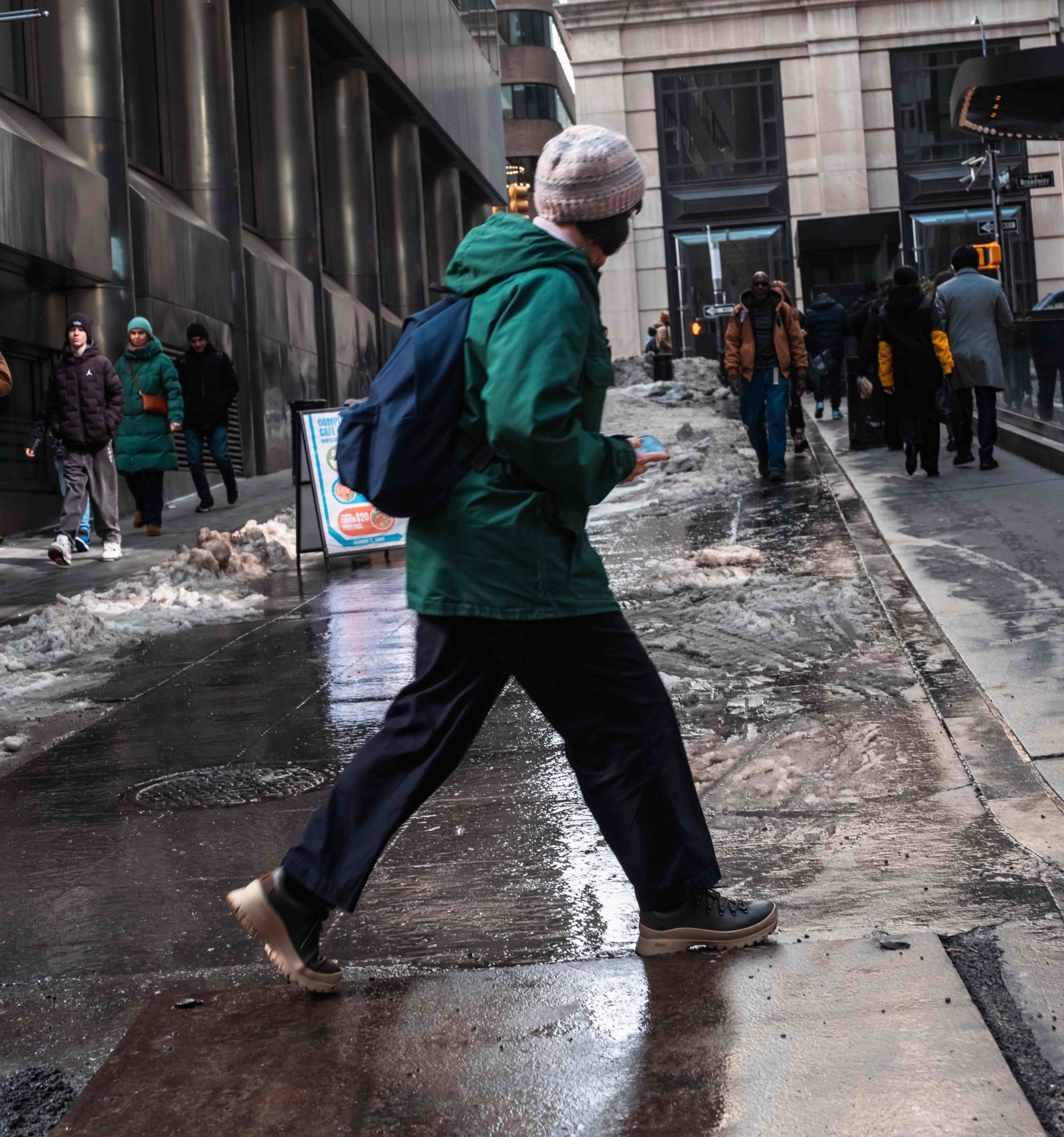
New York certainly felt the brunt of this winter. The powerful snowstorms and record-breaking low temperatures transformed the metropolitan area into a frozen tundra. Residents expressed open frustration about the city’s inability to clear away snow and ice in a timely manner. For weeks, the city resembled a scene dating back to the Ice Age, with huge boulder-like mounds of snow left by plows on curbs and corners. These conditions created a severe winter slip and fall accident-prone environment. So now the question is: should you take a painful slip and fall on snow or ice, who is responsible?
WHO IS LIABLE IF YOU SLIP AND FALL ON AN ICY SIDEWALK OR STREET? :
Responsible property owners often act before the snow falls – using salt, sand, and ash on sidewalks and walkways to melt snow and prevent ice from forming. According to NYC 311, property owners have a short window of time – in some cases only four hours – to clear snow/ice from sidewalks after snowfall has stopped. Property owners who are unprepared or unwilling to do their part to keep their territory clean can be hit with steep penalties and fines and may ultimately cause accidents they can be held legally responsible for.
New York City Administrative Code § 16-123 states that property owners, lessees, or tenants, depending on their lease agreements, are required to “clear snow, ice, and dirt from abutting sidewalks within four hours after snowfall ceases.”
New York City Administrative Code § 7-210, also known as the “sidewalk law,” states that the responsibility of the property owner is to keep sidewalks in a “reasonably safe condition” by repairing all defects and clearing away snow and ice. However, this code does not apply to property owners of one-, two-, or three-family dwellings.
For commercial property owners, it is their responsibility to keep the sidewalks clean in front of their businesses. Sometimes they will hire outside management companies to help clean the sidewalks in front of their property of snow and ice.
The City of New York and its agencies are responsible for keeping public spaces clean such as bus stops, schools, bike lanes, hospitals, parks, underpasses and overpasses, and more. NYC workers are constantly under pressure, especially when it comes to incliment weather. The Department of Sanitation (DSNY) is leaned on the most after a snowstorm. DSNY deploys a fleet of plows to clean snow and ice from the streets and highways to keep things humming along in the city and help minimize the chance of an accident occurring.
CAN YOU BE PARTIALLY AT FAULT FOR YOUR OWN ACCIDENT? :
Due to fast-moving New York foot traffic, sometimes we forget to properly observe our surroundings. Unfortunately in the technologically advanced world we live in today, many of us have our heads buried in our phones as we walk, ignoring what is happening right in front of our feet. If you march right onto a patch of ice, fall and break your arm – you may shoulder a good portion of the blame. That text message or instagram post can wait until you have stopped moving and are not at risk of a fall.
New York follows the “pure comparative negligence law” which allows you to receive compensation for your accident, even if you are mostly at fault. However, the law also states that compensation will be reduced by the percentage of fault that is placed on each party. The law is designed in such a way so you cannot blatantly ignore danger and try to manipulate the system. It gives the deciding court flexibility to determine liability.
Let’s say you’re found to be 99% at fault for your own accident, you would still be able to recover 1% of the damages awarded. But is it really worth that 1% if you could have avoided the accident? That 1% settlement would never give you the peace of mind for the pain and suffering and possible missed time from work. A little focus and attention can go a long way. Take the moment to look before you step, your body will thank you.
ACT PROMPTLY AFTER A SLIP AND FALL ACCIDENT :
There are strict time limits to make a claim against The City of New York, its agencies, commercial or property owners, in the event you feel they are responsible for your accident. As you know, lawsuits are difficult, so it is crucial to consult with an attorney first before acting on any legal proceeding.
Remember in order to have a personal injury case you must prove damages exist in the form of some physical or psychological injury. Without medical evidence to support your claim, you have no damages and therefore, no case. That is why, after an accident occurs – even if you think you are not hurt – it is in your best interest to be checked by a medical professional immediately.
KEEPING OUR CITY CLEAN AS WINTER MARCHES ON:
It is nearly impossible to expect New York City to be cleared immediately after a snowfall. Nobody can wave a wand and magically clear the streets. There are almost 13,000 miles of sidewalk in the five New York boroughs, and if you stretch that out, that would reach nearly halfway around the entire world. So we should try and exercise patience – especially given these treacherous winter conditions we have recently experienced.
Snow is especially tricky because it can melt in the day and refreeze overnight when the temperature drops. Therefore, property owners, city workers, and pedestrians alike should always be aware of black ice on a daily basis, until winter has fully reached its end.
We may have weathered the worst of what Mother Nature has offered so far, but the season is not over yet. In the weeks to come we will see if our patience will be tested one last time before the warmer spring days ahead.